In the era of hyper-resolution camera sensors, sophisticated CGI pipelines, and rapid-fire algorithmic feeds, our threshold for visual wonder has become remarkably high. Yet, on occasion, a piece of raw, unpolished, and intensely mundane backyard footage cuts through the digital noise to ignite a global obsession. Such was the case in June 2026, when a suburban homeowner in Longview captured an impossible visual anomaly. Known widely across TikTok, X, and Reddit as the Texas floating branch mystery, the viral sensation transformed a quiet backyard into a digital laboratory, exposing our deeply rooted fascination with the supernatural, our collective technological skepticism, and the oddities of human and machine perception.
The Backyard Discovery: How a Motionless Dog Led to an Impossible Sight
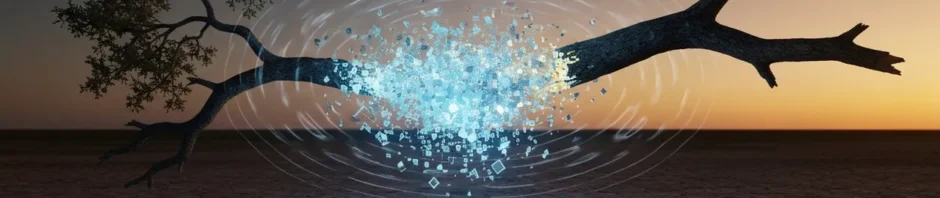
The bizarre sequence of events began on a seemingly routine afternoon when Dakota Filkins arrived home from work. Walking out into his backyard, Filkins was immediately struck by the behavior of his dog. The animal was standing completely frozen in the grass, rigid and unmoving, its gaze locked in a blank, glassy-eyed stare at an empty coordinate in the air above. Following the pet’s line of sight, Filkins looked upward and was confronted by a sight that seemed to defy the fundamental laws of gravity: a dead tree branch, roughly several feet in length, was suspended mid-air with absolutely no visible means of support.
Operating under the TikTok handle @kotakyle1893, Filkins did what any modern observer would do: he retrieved his smartphone and began recording. Aware that the internet is fiercely hostile to easily faked footage, Filkins immediately sought to rule out simple perspective tricks or digital overlays. In his initial upload, which racked up an astonishing 9.8 million views within a single day, Filkins filmed the levitating wood from multiple physical angles. He walked a full path around the coordinates of the suspension, zoomed the lens dynamically in and out, and framed the branch against the distant tree canopy, power lines, and neighboring roof structures. The visual parallax was flawless. The branch was unquestionably occupying a stationary, physical coordinate in three-dimensional space, floating independent of any visible tether.
Deciphering the Enigma: Debunking Attempts of the Texas Floating Branch
As the footage spread like wildfire across secondary platforms like Reddit’s r/Glitch_in_the_Matrix and X, digital sleuths, physicists, and amateur videographers scrambled to formulate a logical explanation. The debate quickly splintered into highly technical camps, each attempting to demystify the Texas floating branch using different models of physics, optics, and folklore:
- The Monofilament and Spider Silk Theory: The most dominant scientific hypothesis suggested that the branch was held aloft by a single, high-tensile strand of spider silk or a nearly invisible piece of monofilament fishing line. Advocates of this theory pointed out that certain species of large orb-weaver spiders produce silk with a tensile strength comparable to high-grade steel. Under specific overcast lighting conditions or in the aftermath of a light drizzle, these micro-structures can become completely invisible to the limited dynamic range of a standard mobile camera, creating a convincing levitation illusion.
- The Optical Depth and Camera Lens Compression Theory: Camera experts argued that the anomaly could be attributed to focal compression and perspective distortion. When smartphone cameras shoot in flat, low-contrast lighting, the sensor struggles to map three-dimensional depth accurately. Skeptics theorized that the branch was actually resting on a thin, out-of-focus wire or distant branch that was flattened into the background by the camera’s post-processing algorithms, leaving only the high-contrast bark of the dead branch visible.
- The Simulation Hypothesis: For believers in simulation theory, the absolute stillness of the branch—which did not sway, pivot, or drift even when a light breeze rustled the surrounding foliage—indicated a literal spatial rendering error. Proponents argued that the physical universe is an engineered information construct, and that the branch was caught in a localized “physics engine freeze,” akin to an unrendered asset in a video game.
- Suburban Folklore and the Fae Trap: In the realms of esoteric internet culture, the levitating branch was widely classified as a “fae trap”. Originating from ancient Celtic and pagan mythology, a fae trap is an unnatural, enticing arrangement placed in the natural world by fairies to lure curious humans into their realm. This explanation, while playful, highlighted how ancient mythology is rapidly digitized and reframed for modern audiences facing inexplicable events.
The Counter-Arguments: Why Simple Explanations Crumpled Under Testing
While the spiderweb and monofilament hypotheses offered comfort to rationalists, Filkins and his supporters quickly published follow-up videos that systematically dismantled these simple explanations. The first major point of contention was the local weather. Shortly after Filkins recorded his initial video, a severe Texas rainstorm rolled through the Longview area. Under normal physical circumstances, a heavy downpour would instantly saturate and weigh down a fragile spiderweb, or snap a single strand of silk supporting a heavy piece of deadwood. Yet, when the storm cleared, the branch remained rigidly locked in its exact coordinate, entirely unaffected by the downpour or the accompanying winds.
Even more unsettling were the physical interaction tests conducted by Filkins. In a series of updates designed to find physical tethers, Filkins threw stones directly at the coordinates of the floating branch. In a physical environment, a stone hitting a suspended object or passing near its tether would cause it to swing, fall, or at the very least, reveal the vibration of a wire. Instead, the thrown stones appeared to pass directly through the spatial coordinates of the branch as if it had no physical mass. This prompted online theorists to wonder if they were looking at a complex holographic projection or a temporal rift where physical matter had become uncoupled from its visual properties.
The Physics of Glitches and Cognitive Dissonance in the Digital Age
The frenzy surrounding the Texas floating branch speaks to a broader psychological phenomenon that has captured the public imagination in the mid-2020s. Neurologists and cognitive scientists often note that the human brain is an advanced pattern-recognition machine. When we encounter visual input that violates our deeply ingrained understanding of gravity and space, it triggers acute cognitive dissonance. Up to 80% of people report having experienced at least one anomalous, inexplicable event in their lives—such as déjà vu or unexplained physical coincidences—which our minds struggle to process.
In the digital era, this neurological gap is filled by the “Glitch in the Matrix” subculture. Rather than turning to traditional religious or spiritual explanations for anomalous events, modern internet users increasingly look to technological metaphors. We frame our confusion in the vocabulary of computer science, interpreting mysterious backyard objects as unrendered code, missing assets, or server lag. This shift in digital folklore suggests that as we spend more of our lives in virtual, simulated environments, we begin to perceive our physical reality through the lens of software, expecting the real world to exhibit the same bugs and glitches as the programs we run daily.
The Vanishing Act: A Digital Enigma Frozen in Time
As the online debate reached a fever pitch, local news networks, independent debunkers, and physics enthusiasts began planning expeditions to Longview to conduct rigorous physical assessments of the yard. Armed with high-powered lasers, wind machines, and material scanners, these groups hoped to finally put the spiderweb and digital hoax theories to the test. However, the coordinates of the mystery remained empty.
Overnight, before any scientific team could arrive, the branch mysteriously vanished. The sudden disappearance left no physical trace, no fallen debris, and no evidence of mechanical rigging. For skeptics, the timing of the disappearance was highly convenient, suggesting that Filkins had dismantled his elaborate physical hoax before it could be exposed by professional investigation. For believers, the sudden vanishing was the final confirmation of an anomalous event—a spatial correction where the “code” of our reality was patched, and the misplaced asset was swept away.
Conclusion: The Legacy of Suburban Mysticism
Ultimately, the Texas floating branch remains permanently archived as one of the most intriguing digital curiosities of 2026. Without physical evidence or high-resolution scientific data, we are left with nothing but compressed, viral pixels and the competing narratives of those who watched it unfold. Whether the incident was an exceptionally clever monofilament prank, a rare trick of light and smartphone sensor technology, or a genuine tear in our understanding of physics, it served as a powerful reminder of our shared desire for mystery. In a world increasingly mapped, measured, and explained by science, the image of a dead branch hanging stubbornly in the Texas sky is a poetic testament to the spaces that still refuse to be easily understood.